
White Blue Red, 2020
lacquer and paper on wood
225 x 206 x 8 cm
![]()
installation viewlacquer and paper on wood
225 x 206 x 8 cm
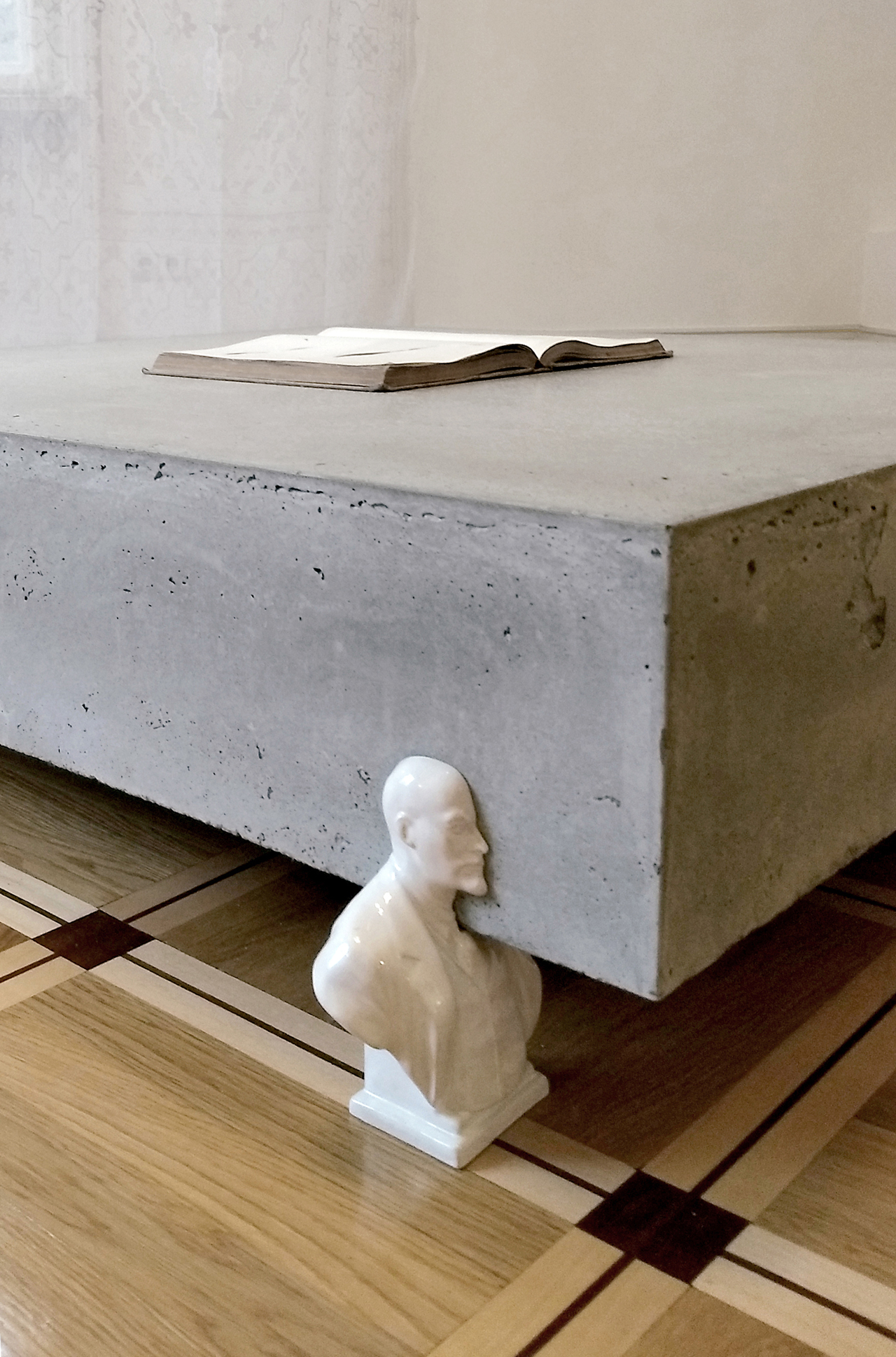
Untitled (Lenin), 2020
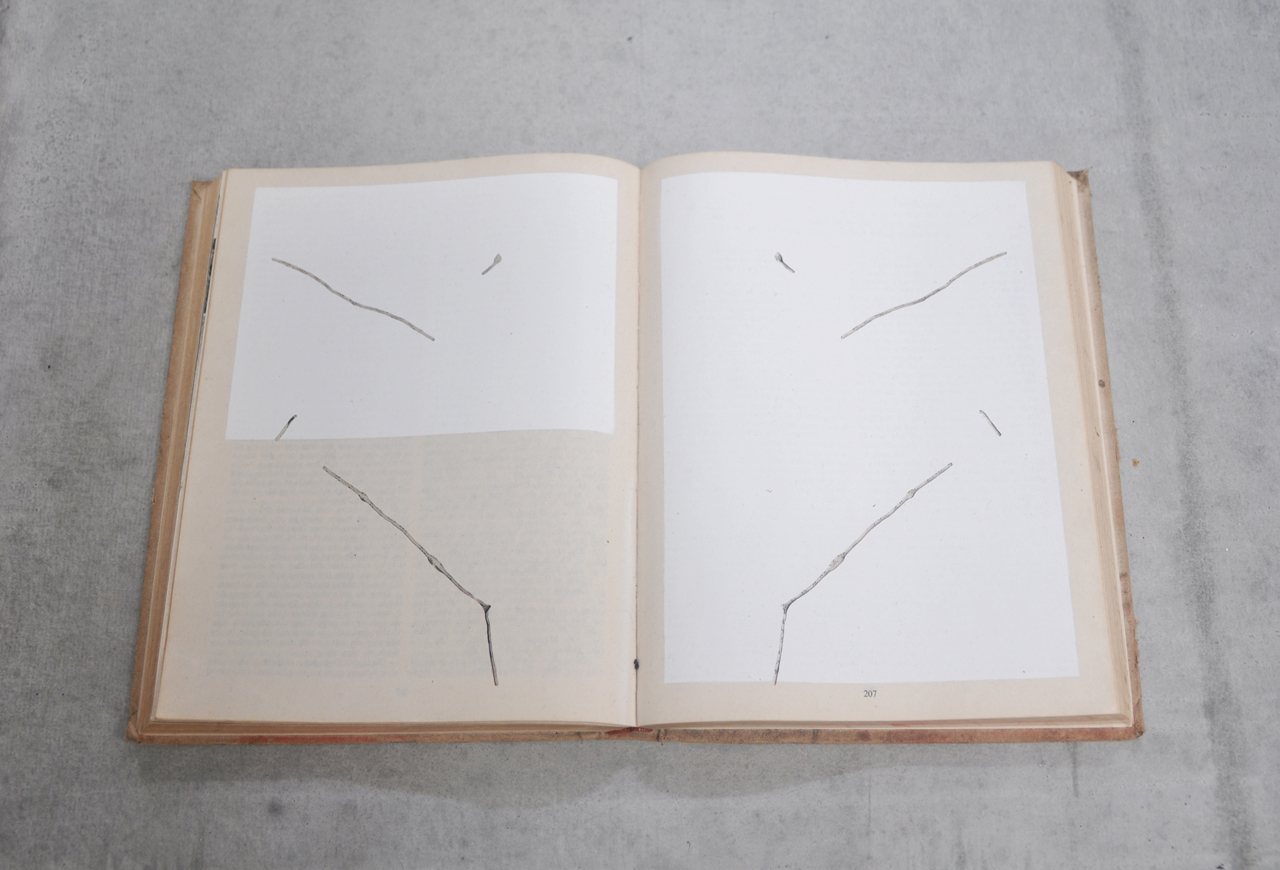
ceramics, concrete, spray paint on bookpage
105 x 105 x 28,5 cm
неваляшка (short version)
Video, 31,11’, loop
IF (2020) engaged with different thematic spheres across four rooms of the historic Villa Francke in Potsdam, entering into dialogue with the building's turbulent history. This history is intimately interwoven with German colonialism, Nazi occupation, and later, during the GDR era, with the Soviet military presence.
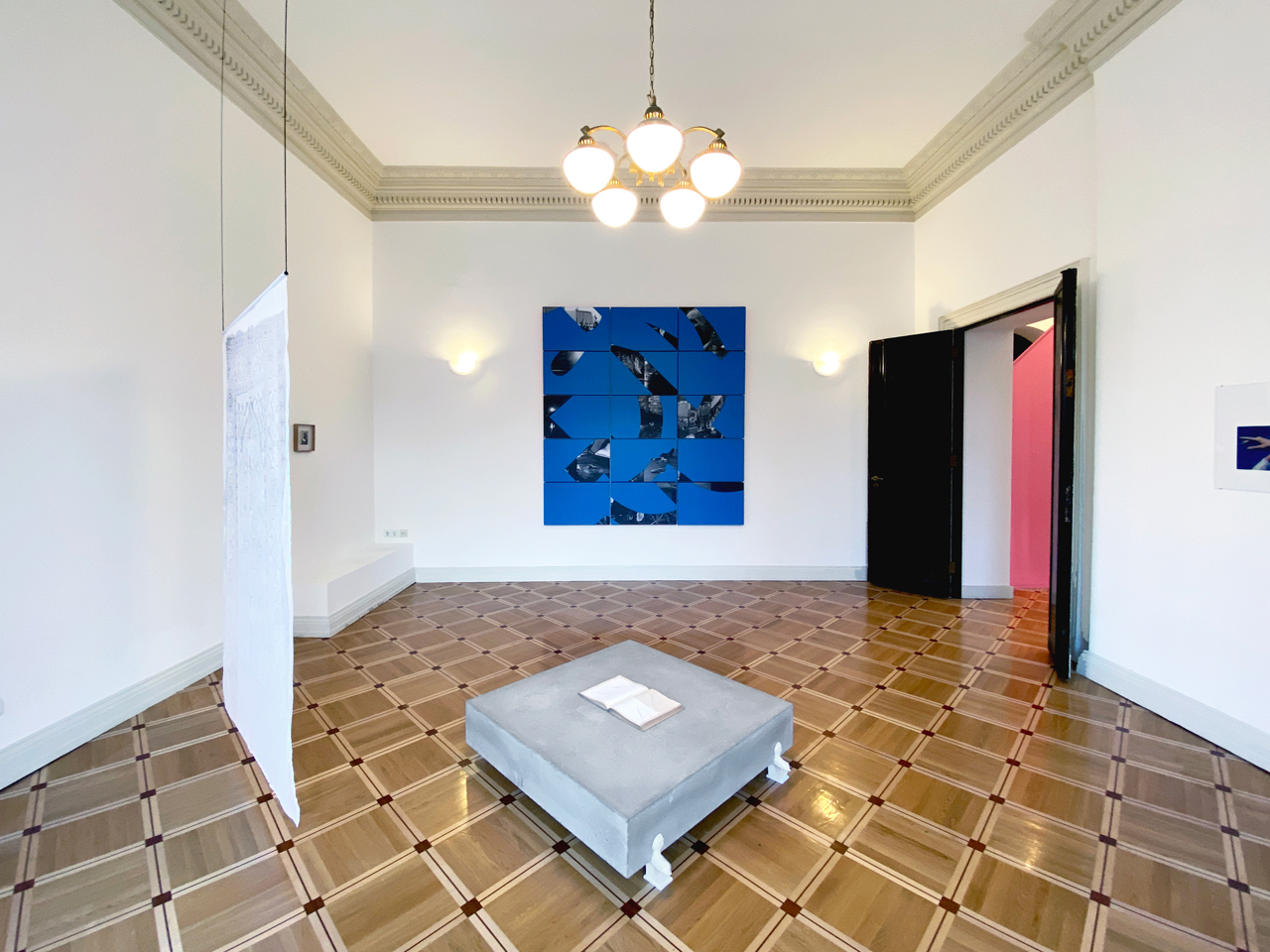
White Blue Red is based on press images from the August Coup in Moscow in 1991, which precipitated the collapse of the Soviet Union. Drawn from the photo book „The Coup in Russia“ published that year, the blue-red tableau shows a dismantled hammer and sickle composed of enlarged photographic details. This rearrangement of the communist emblem addresses the radical destruction and decades-long reconfiguration of a political system.
Untitled (Lenin): Lenin‘s ideology rests in book form on a pedestal supported by four Lenin busts—they literally bear the weight of the ideology. By inverting the traditional monument structure the work questions who or what is truly being memorialized: the individual or the system of thought they represent.
Неваляшка (Nevalyashka), a classic Russian roly-poly toy that always returns upright, appears as looped video eternally staggering, echoing the political instability of the former Soviet Union.